Production & Compliance
Five countries.
One reliable supplier.
Country of origin becomes a commercial decision you make with us rather than a constraint you inherit. Vertical integration from yarn to finished garment, and the documentation European buying and compliance teams actually ask for.
5 Countries$1B+ Annual RevenueVertical IntegrationFull-Package Programs
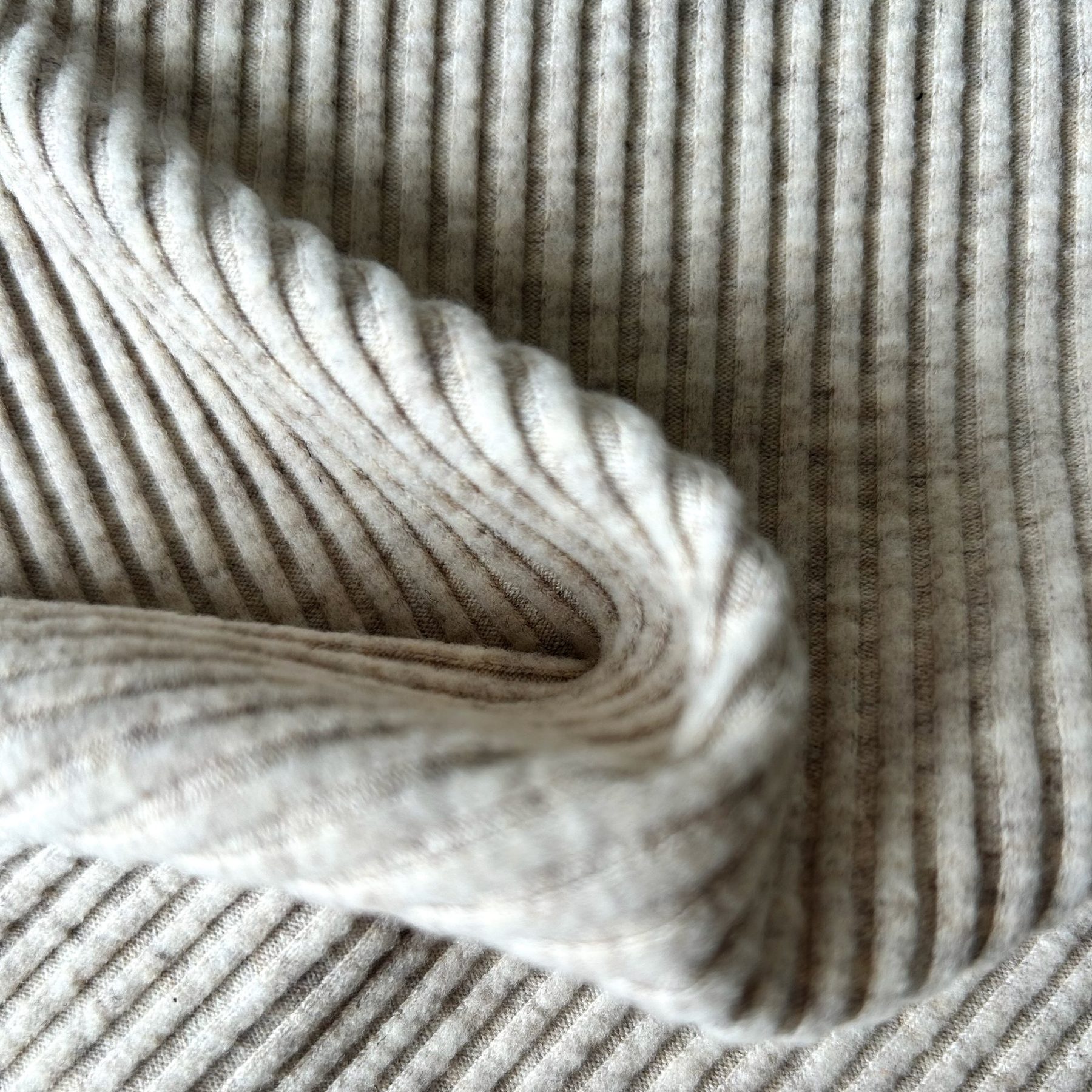
Vertical Integration
Why owning the fabric stage changes what we can promise
- Fabric is developed, not selected. A handfeel target is met by changing yarn, gauge, finish or all three — not by picking the nearest thing in a library.
- Quality is traceable. Shading, pilling or shrinkage deviation traces back to a specific dye lot and machine rather than getting lost between vendors.
- The calendar compresses. Fabric does not queue at a third-party mill that has larger customers ahead of you.
- Traceability is real. Fibre and yarn source recorded through to finished goods — which is what the coming EU product-level data requirements will need, and what French AGEC declarations already need.
Duty & Market Access
Origin is worth real money on a knit programme
Plan it deliberately rather than absorb it.
Knit apparel entering the EU under Chapter 61 normally carries duty of around 12%. Preferential origin can remove most or all of it. Because we produce across five countries, origin can be planned around the programme instead of dictated by where a factory happens to be.
| Origin | EU Treatment | Condition |
|---|---|---|
| Vietnam | EVFTA preferential | Apparel rule requires fabric formation in Vietnam, with cumulation from Korea and the EU. Confirm whether our Vietnam operation forms its own fabric. |
| Cambodia | Everything But Arms | Duty-free for qualifying apparel, subject to the scope of the partial withdrawal. Confirm current status. |
| China | MFN, no preference | Usually the right call where development complexity or fabric capability outweighs the duty. |
EU Compliance
What European buying teams will actually test you on
This is the section that gets read at vendor approval.
- General Product Safety Regulation. Products placed on the EU market need a responsible person established in the Union, identifiable on the product or packaging. Our Barcelona presence is relevant to how that is structured.
- Childrenswear safety. EN 14682 on cords and drawstrings, EN 71-3 on migration of certain elements, small parts and pull testing, nickel release on metal trims, and OEKO-TEX Standard 100 Product Class I where a brand specifies it for baby. Built in at design stage, evidenced by test report.
- REACH and restricted substances. Testing to your RSL or to a standard package.
- French AGEC labelling. Environmental and traceability information declared per product, including the country of each major production stage. Our vertical integration means we hold that data rather than having to request it up a chain.
- Extended producer responsibility. Textile EPR schemes are live in France and being implemented across other member states. We supply the composition and weight data these declarations depend on.
- Supply chain due diligence. Facility-level data for your own reporting, including subcontractor disclosure.
Recognition
Third-party signals for your vendor approval file
- Top 20 National Apparel Industry. Ranked among China's top twenty garment enterprises by the China National Textile & Apparel Council.
- Zhejiang Smart Factory. Provincial recognition for automated manufacturing systems.
- Provincial Engineering Technology Center. Our fabric and technique centre holds provincial-level engineering technology status.
- Ningbo Mayor Quality Award. Municipal award for manufacturing standards and process discipline.
- Top 50 Ningbo Industrial Taxpayer. Sixteen consecutive years — a proxy for scale and financial stability.